Take 04
Taping traffic in Austin
A city ambience for a driving scene needs real traffic. Getting it means time in a parked car and on the road.
Library traffic sounds generic because it is. A driving scene set in a specific city wants that city's roads: its mix of trucks and scooters, how fast traffic flows on the main arteries, the hum of tyres on its particular pavement, the buses. Austin is a good place to learn this, because so many of its sounds change within a few blocks.
The work splits into two halves: standing still on the sidewalk to capture the street as a pedestrian hears it, and riding in a car to capture the road as a passenger hears it. Both take longer than expected, and both are worth doing at several times of day.
Standing still
Start with static recordings from the sidewalk. South Congress on a weekday evening gives a steady mid-speed flow with plenty of people in it. A frontage road beside the highway gives the deep, constant wash of heavy traffic with occasional acceleration. A quiet neighbourhood street off Burnet Road gives the sparse version, one car at a time, each with its own approach and fade.
Stand back from the kerb, keep the windscreen on the recorder, and take ten-minute takes. Note the time and direction faced for each. Rush hour and late evening sound like different cities.
Inside the car
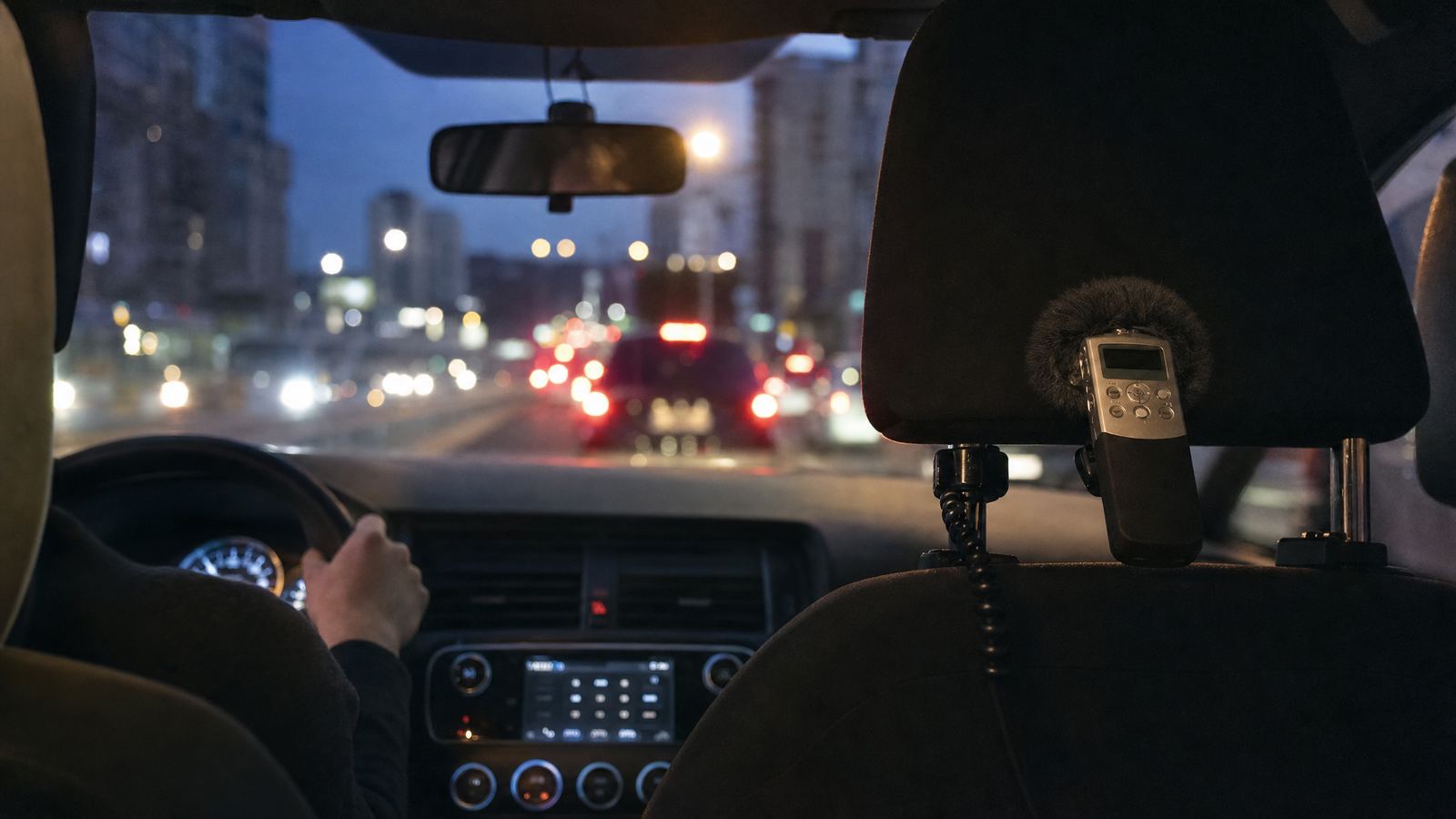
For the sound a passenger hears, clip a small stereo recorder to the passenger headrest at about ear height. Keep the radio off and the windows up for the main take, then do a second pass with the driver's window open a crack, which adds the outside world without the roar. Record on several kinds of road: city streets with stops and starts, a long steady stretch on MoPac, and a slow crawl in heavy traffic on Riverside.
The person driving should drive and nothing else. Set the recorder before leaving, press record, and leave it alone until the car is parked. Checking levels or swapping cards in traffic is exactly the kind of distraction that causes the problem this kind of recording sometimes captures by accident.
When a session ends in a crash
Busy roads are busy for a reason, and a sound trip can end with a collision like any other drive. If that happens, get to a safe spot if the car can move, call 911 when anyone is hurt or the road is blocked, and get checked by a doctor even if you feel fine, since some problems take a day or two to show. Photograph the vehicles and the scene, and swap insurance details with the other driver.
The questions after that, about medical bills, a damaged car, lost work and the other driver's insurer, can be hard to sort out alone. Many people in Austin talk with an Austin car crash lawyer before signing anything an insurance company sends, so they understand where they stand.
Back in the room
Once home, pick the steadiest few minutes from each location and cut out horns and voices that would pull attention in a scene. Layer one static street recording under an in-car take at a low level, and the scene's road starts to sound like a real place at a real hour.