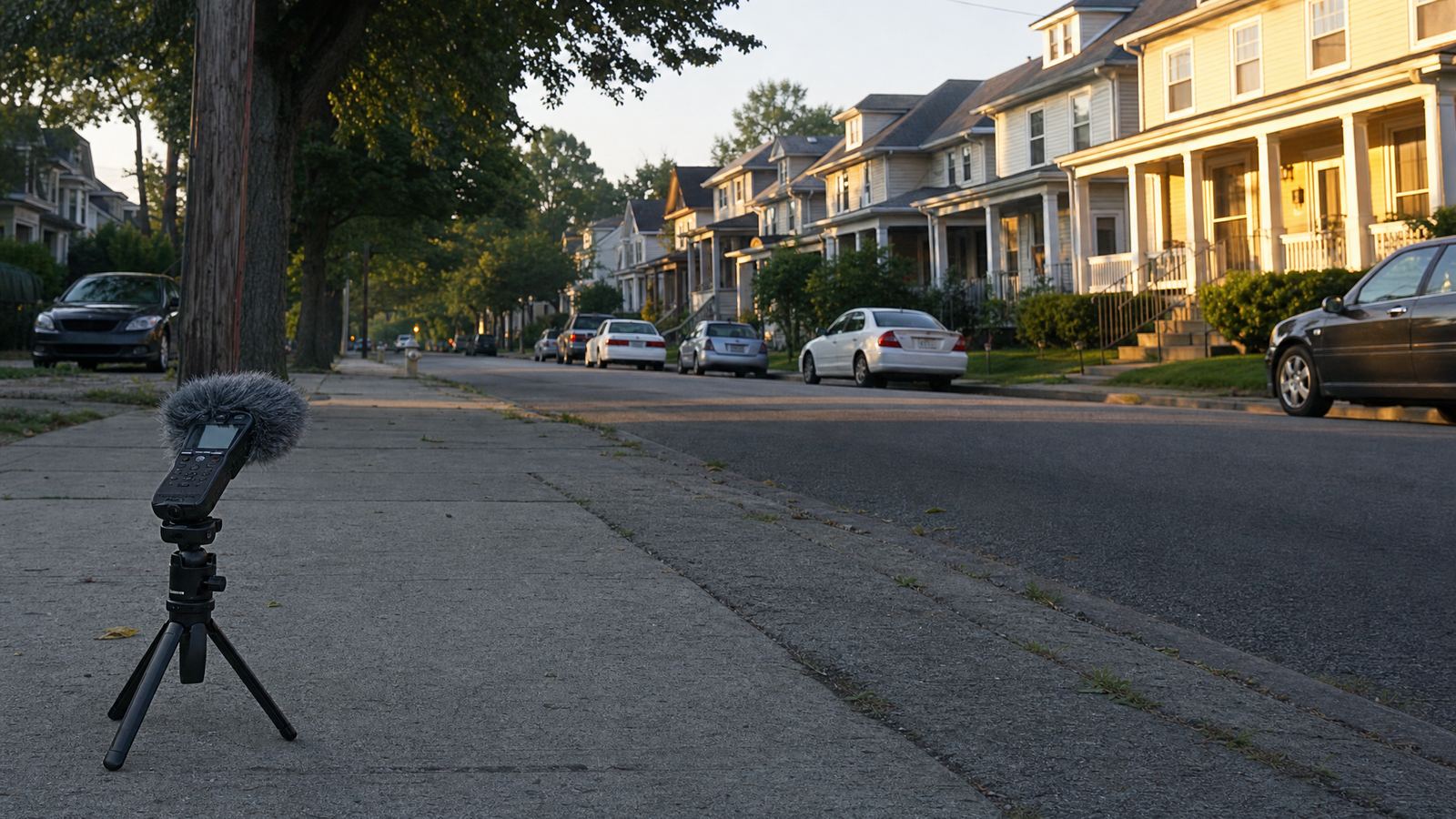
Take 03
Recording a street at dawn
The hour before a city wakes up is the best time to capture its character, and the shortest.
A street at dawn has a short window. The traffic has not started, the birds have, and the sounds that make one place different from another are audible on their own: a particular gate, a dog two yards over, the hum of a transformer on a pole, a train a mile off. An hour later the road noise covers all of it.
Plan to be set up and recording fifteen minutes before sunrise. Check the forecast for wind the night before. Anything above a light breeze will rumble across the microphones and ruin most of the takes, and no plug-in fully fixes wind.
Gear, kept light
A portable recorder, a furry windscreen for it, a short tripod or a beanbag, headphones that close around the ears, and spare batteries. Cold mornings drain batteries quickly. Bring a small notebook too; field recordings without notes become unsorted files within a week.
Where to put the recorder
Pick a spot off the main line of the street, near something that holds the place's identity. A porch step, a low wall, the base of a big tree. Put the recorder down and step well away from it. Even quiet breathing and the rustle of a jacket are louder than they seem. If someone walks by and asks, say it is a sound recording of the morning; most people find that pleasant and move along quietly.
Set the gain so the loudest sound expected peaks about a third of the way below the top of the meter. A passing car at dawn is louder than it seems after twenty minutes of birds.
Listening before recording
Spend the first five minutes with headphones on and the recorder running, simply listening through it. The microphones hear differently from ears. They pick up a refrigeration unit behind a shop that the brain had filtered out, or a buzzing street light directly overhead. Moving ten metres down the street can remove a sound like that entirely, and it is far easier to move now than to edit later.
Turn slowly to face different directions and notice how the balance changes. Facing along the street favours traffic; facing a row of gardens favours birds. Neither is wrong, but each take should be a choice.
Watch the meter as well as listening. A level that sits steady and low with occasional peaks is a good street. One that never falls back to a quiet floor usually means a hum or a steady machine nearby, and that sound will sit under every edit made from the take.
Long takes
Record for ten minutes or more without stopping. Short clips sound like clips. A long take lets the street develop: the first car, a door, the light changing in the birdsong as the sun comes up. Those changes are what make the recording useful later, because they give an editor somewhere to cut.
Say a slate into the microphone at the start of each take: place, direction faced, anything unusual. It costs five seconds and saves an hour of guessing later.
After
Copy the files before leaving the house again, and name them with the place and the take number. Listen through once at normal volume, not loud, and write down the minutes worth keeping. Most of a dawn session is unremarkable. The remarkable minute is the one that gets used for years.
Go back to the same spot in a different season. Spring dawn and winter dawn on the same street share almost nothing but the traffic, and a set of recordings of one place across a year is worth more than a single morning in many.