Take 05
Footsteps on five surfaces
Gravel, boards, tile, leaves and snow, recorded with one pair of shoes and a few boxes.
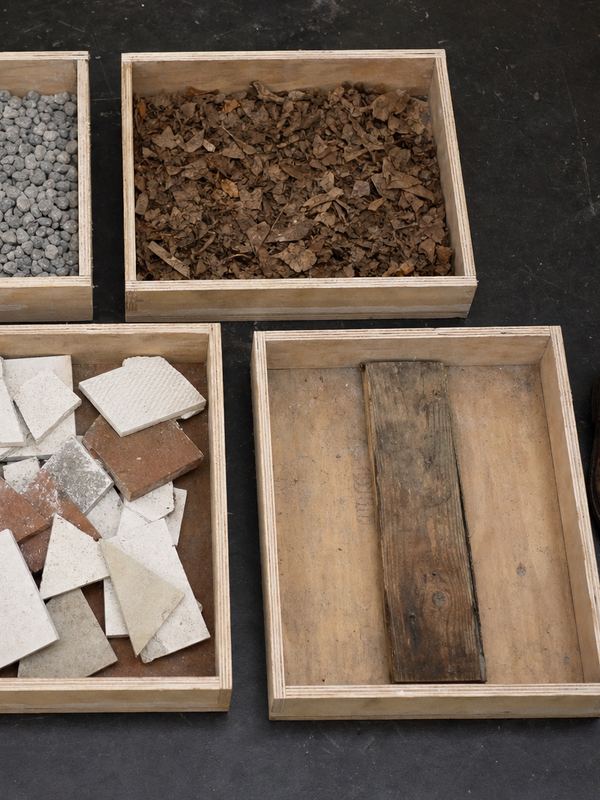
Footsteps carry more of a scene than people notice. They say how heavy someone is, how fast they are going, what the ground is like and what the weather has done to it. They are also among the easiest sounds to perform at home.
Build five shallow boxes from scrap plywood, each about the size of a large doormat and deep enough to hold a few centimetres of material. Line each one with a towel to keep the box itself quiet.
The five
Gravel. Pea gravel from a garden centre. Walk in place with the weight rolling from heel to toe. Too much gravel sounds like a beach.
Boards. One loose plank laid on two strips of carpet. Old boards creak more convincingly than new ones.
Tile. A few spare floor tiles laid loosely. Hard-soled shoes give the click; trainers give the squeak.
Leaves. Dry leaves, the crisper the better, topped up as they crumble.
Snow. A cloth bag of cornstarch, squeezed in the hands in time with the steps. It is the classic and nothing has replaced it.
Squeeze slowly for fresh powder and quickly for packed, icy snow. A little salt mixed in adds crunch. Keep the bag well away from the recorder, because the powder drifts and gets into everything.
Shoes and clothes
Keep a small rack of shoes: hard leather soles, rubber trainers, a pair of heavy boots and something with a heel. The shoe matters as much as the surface. Wear soft cotton while performing, because a nylon jacket or a jangling belt will add its own sound to every step, and that rustle is very hard to remove afterwards.
Performing them
Watch the picture or imagine the walk, and match its pace. Record each surface at three speeds: a stroll, a purposeful walk, and a stop. The stop, with its last scuff and settle, gets used constantly. Keep the microphone about an arm's length away and a little above the box.
Leave a second of silence before the first step and after the last, and do not talk between takes while the recorder is running. Label each file with the surface, the shoe and the speed. A library of forty short, well-named footstep takes covers most scenes a small project will ever need, and it can be built in a single afternoon.