Take 04
Ears after a loud night
Ringing after a show or a long session is a warning. Some habits make it far less likely.
Anyone who records or mixes for a living depends on two small organs that cannot be replaced. That is obvious and still easy to forget at the end of a long night, when the monitors have crept up a notch every hour and the band was louder than expected.
The ringing that follows a loud evening is a sign that the ears have been pushed too far. It usually fades in a day. Repeated often enough, the damage builds and the ringing or the dullness stays. The NIDCD's page on noise-induced hearing loss explains how sound level and time of exposure work together, and it is short enough to read twice.
Plugs that do not wreck the music
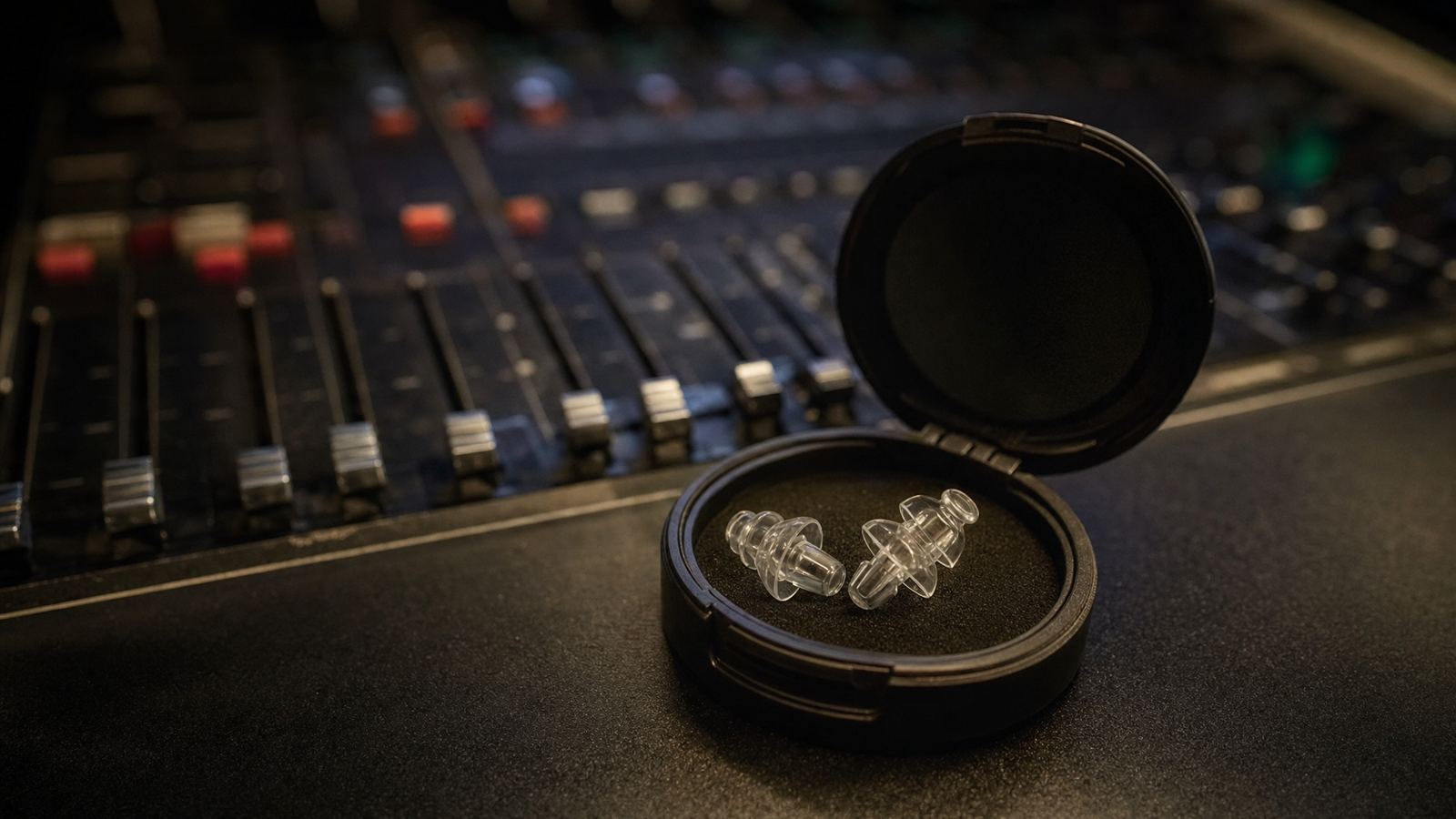
Foam earplugs block a lot of sound but muffle the high end, so music sounds like it is coming through a wall. Musician's earplugs reduce the level more evenly across frequencies, which means the mix still sounds like a mix, only quieter. They are not expensive and they live in a small case that fits on a keyring.
Level and time
When mixing, set the monitors at a moderate level and leave them there. Turn up briefly to check the low end, then back down. Ears adapt within minutes, so a mix that seems quiet after an hour at high volume is usually still loud. Take a ten-minute break every hour in a quiet room. Coming back with rested ears also improves the decisions.
Know the numbers roughly
A free sound level meter app on a phone gives a useful rough reading, good enough for habits if not for a laboratory. Check it at a show, in a rehearsal room, and at the mixing position. Many people are surprised by how loud an ordinary rehearsal is, and how quickly the safe listening time shrinks as the level climbs. A few readings change habits faster than any warning.
At shows
Stand away from the speaker stacks; a few metres make a large difference. Step outside between sets. The bar at the back of the room is usually the quietest place in the building, and the sound there is often better balanced anyway, because the mix has had room to blend. Put the earplugs in before the first band starts rather than after the ears already feel full.
Headphones
Closed headphones in a noisy place tempt people to turn them up to cover the room. Noise-cancelling models help here, because the music can stay quieter when the outside is reduced.
If ringing lasts more than a day, or hearing seems muffled after a loud event, see a doctor or an audiologist rather than waiting it out.
A baseline hearing test is worth having for anyone who works with sound. It gives something to compare against later, and audiologists can fit custom-moulded plugs that are comfortable enough to wear for a whole evening.